
Most small-business websites look fine and book nothing.
Small Business Website Design That Turns Visitors Into Booked Jobs.
It is 2am and a homeowner is standing in a cold house with a dead furnace. They search, they tap your site, and they wait. Four seconds in, nothing has painted on the screen. They hit back and tap the next result. You never knew that job existed.
Your website is the busiest door into your business, and most doors leak. We build the kind that does not. Our web design is hand-coded, loads in about two seconds, tap-to-call on every screen, and every lead routed straight to you. We design it, build it, host it, and keep it running.
Flat $199/mo, no setup fee, month to month after year one. We build, host, and maintain it.
- Launch date set at kickoff
- Loads in about 2 seconds
- Your domain and content stay yours
- No setup fee
- Built for the trades
A small business website is a fast, mobile-first site built to turn visitors into booked work, not a template that only looks nice. It loads in about two seconds, puts a tap-to-call button on every screen, and sends every lead straight to your inbox. WebDevAuto designs, builds, hosts, and maintains it for one flat monthly price.
Start here
Start with website design
Your website plan is selected. Add anything else your business needs, or leave it as it is. Everything is month to month after the first term, nothing here has a setup fee, and you can add or drop pieces later without rebuilding the site.
Pick the look
Nine finished designs, each showing the same business so the only thing that changes is the look. You can change the colours in a second, and change your mind later.
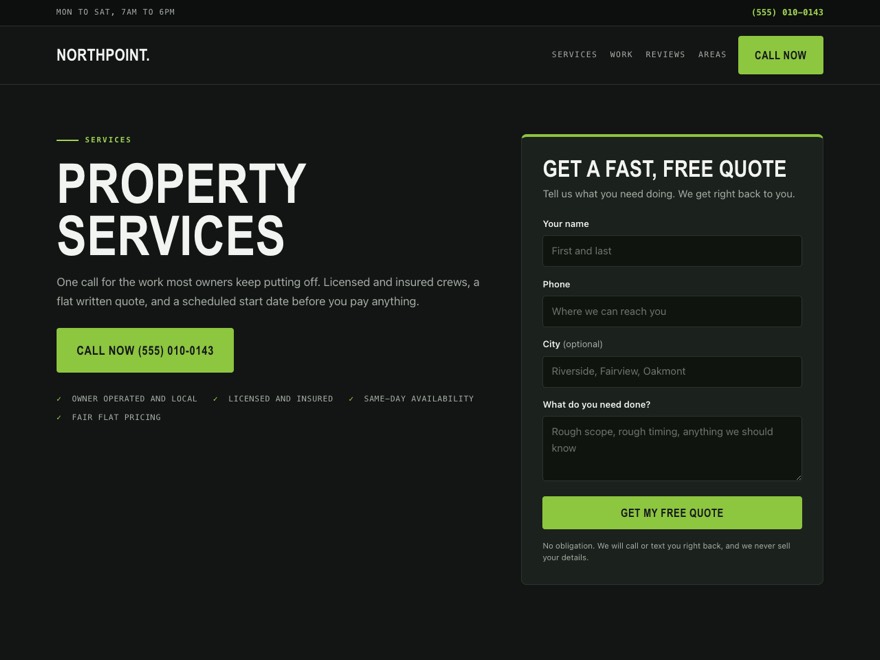
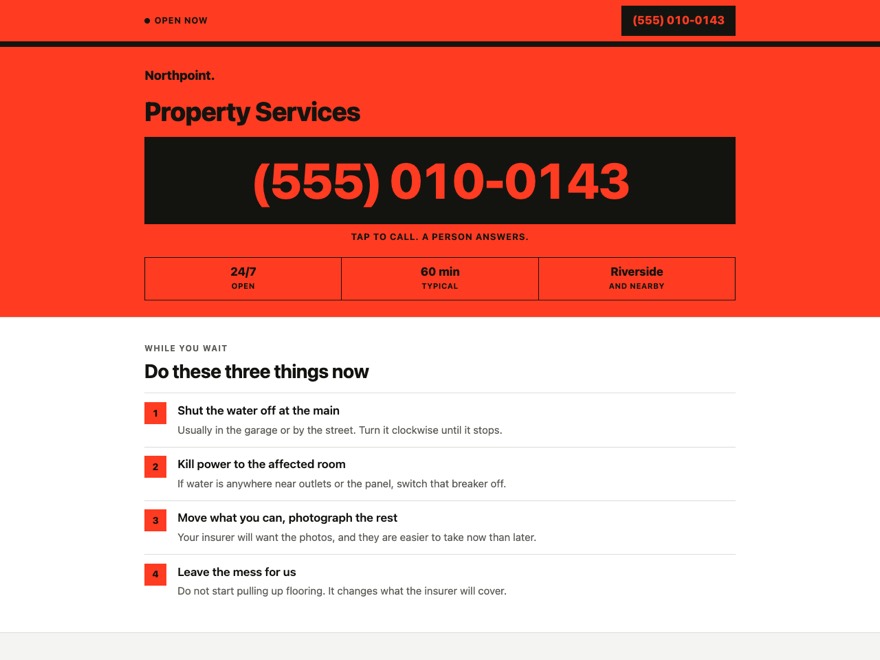
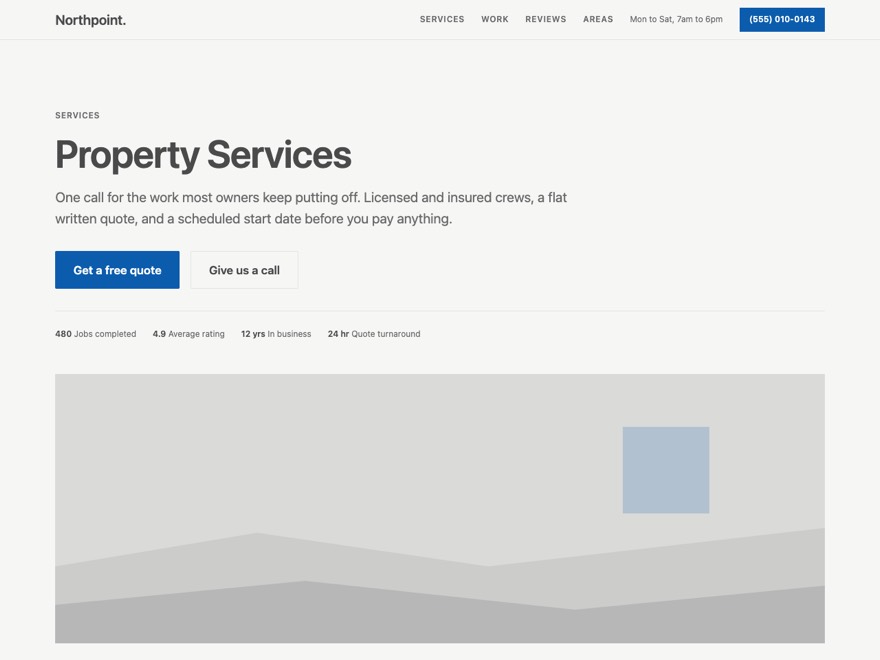
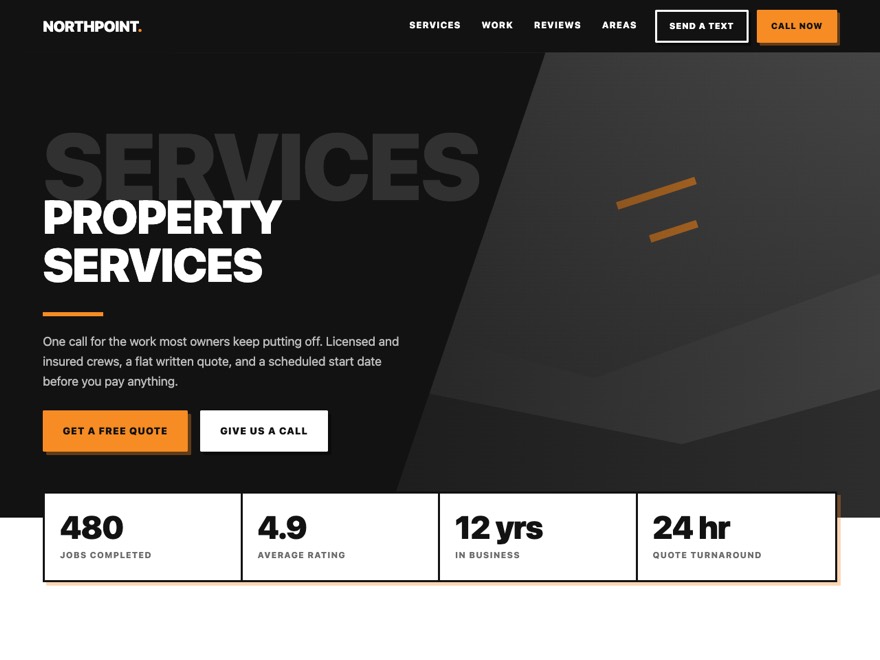
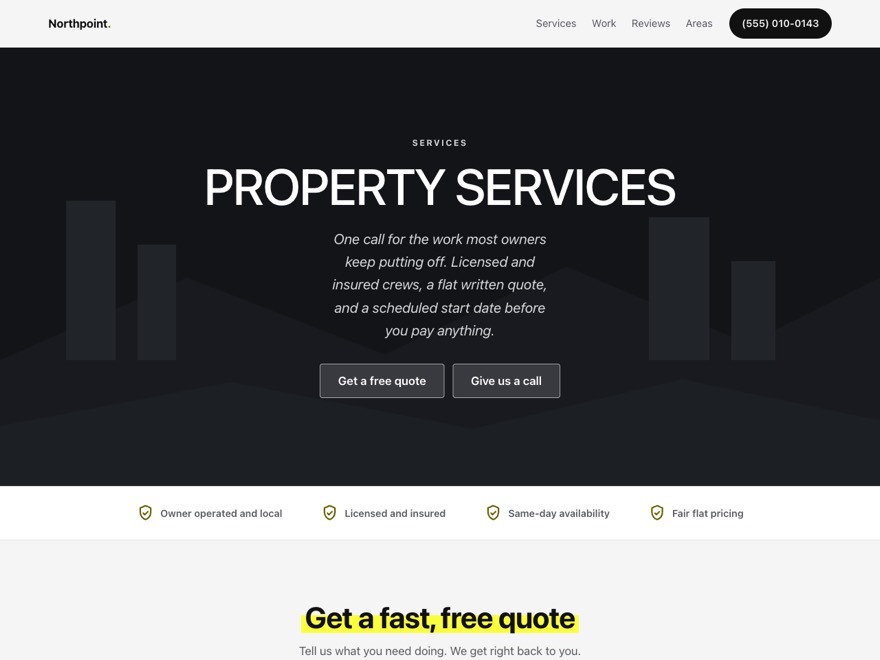
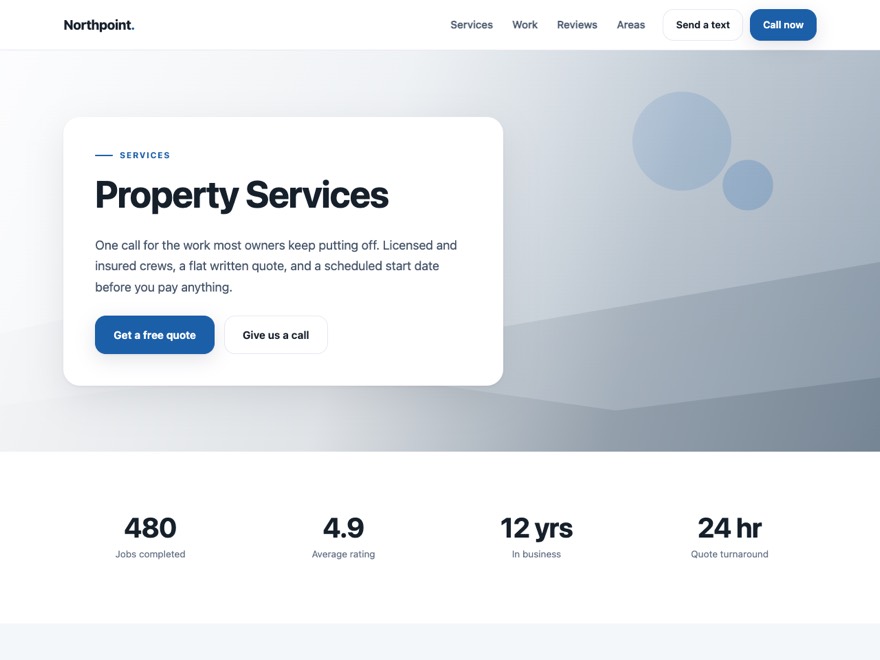
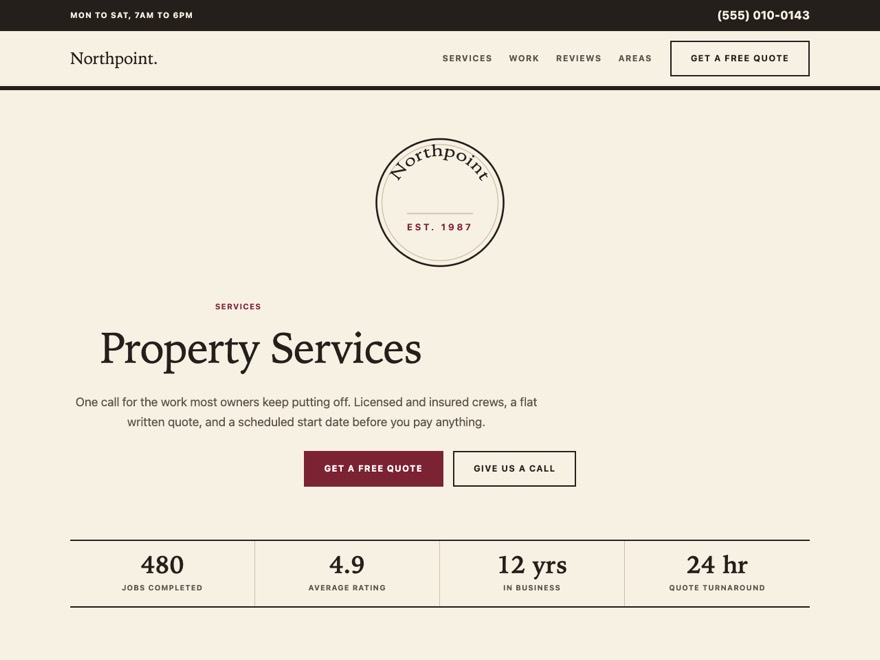
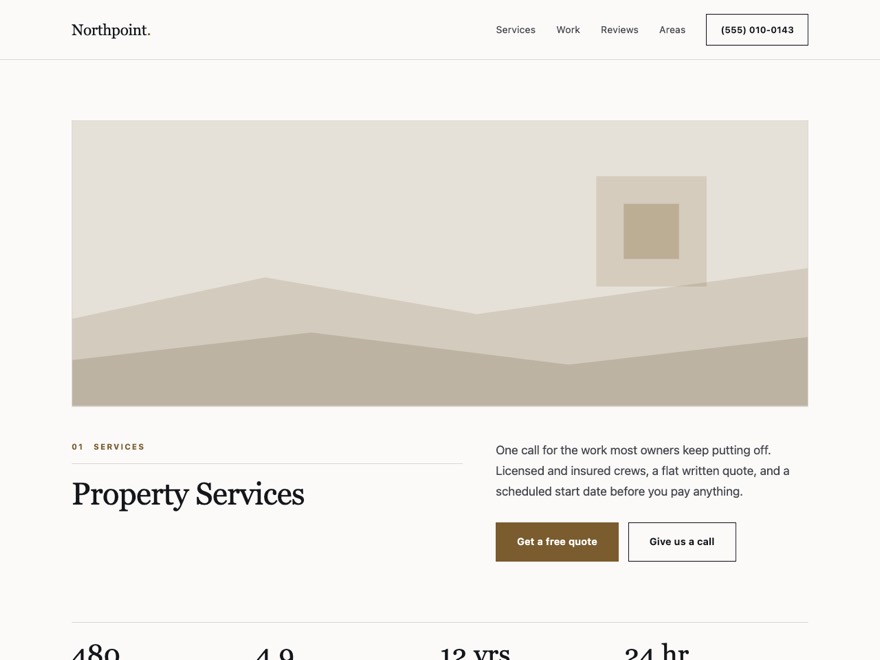
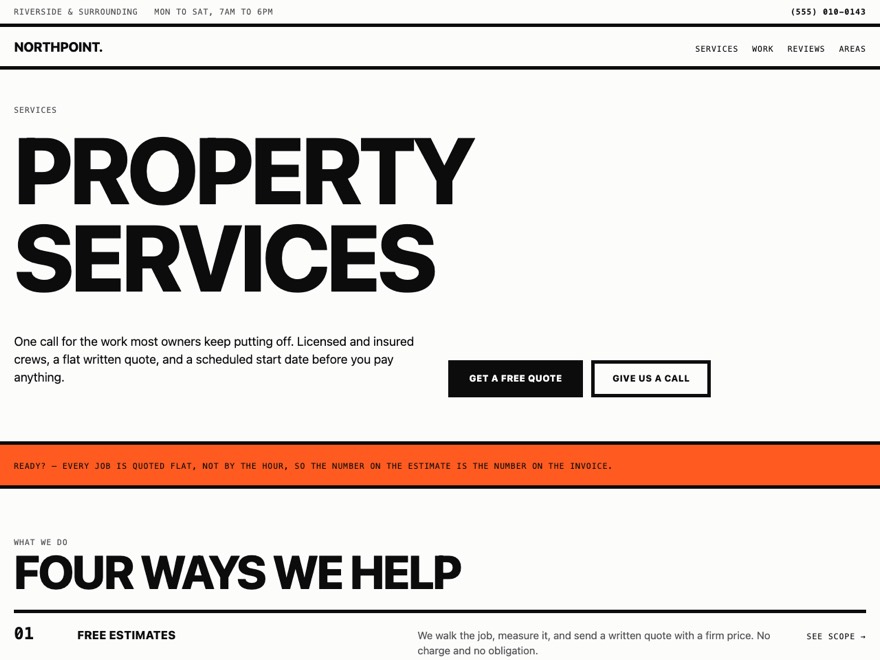
Every design costs the same and every one is yours to change later. Picking now just means we start from the right place instead of guessing.
$199/mo
$199/mo. No setup fee.
The website carries a 12-month term, then month to month. SEO carries 6 months. The CRM is month to month. Tax is added at checkout, and there is no setup fee on any of it.
Web design we build, host, and run
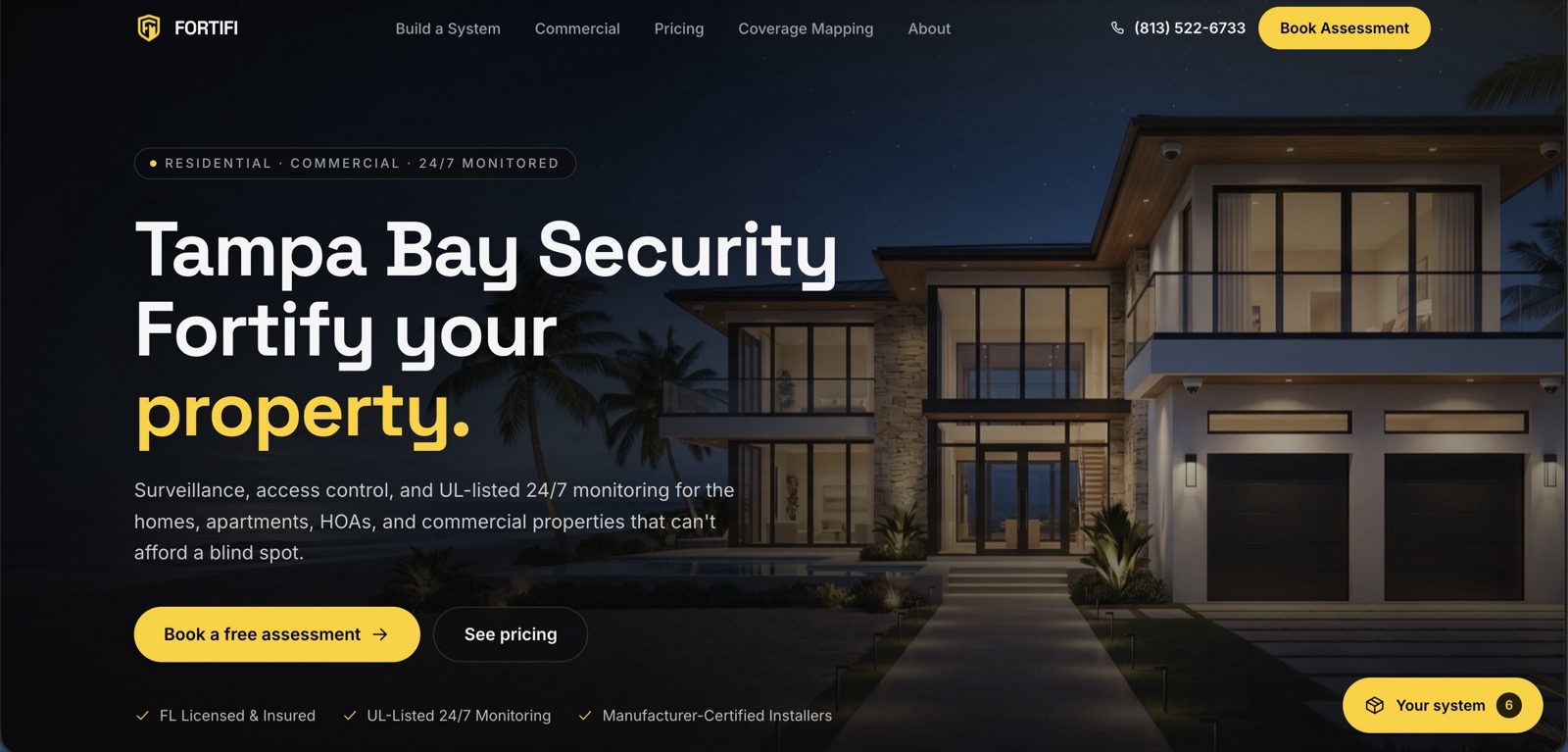
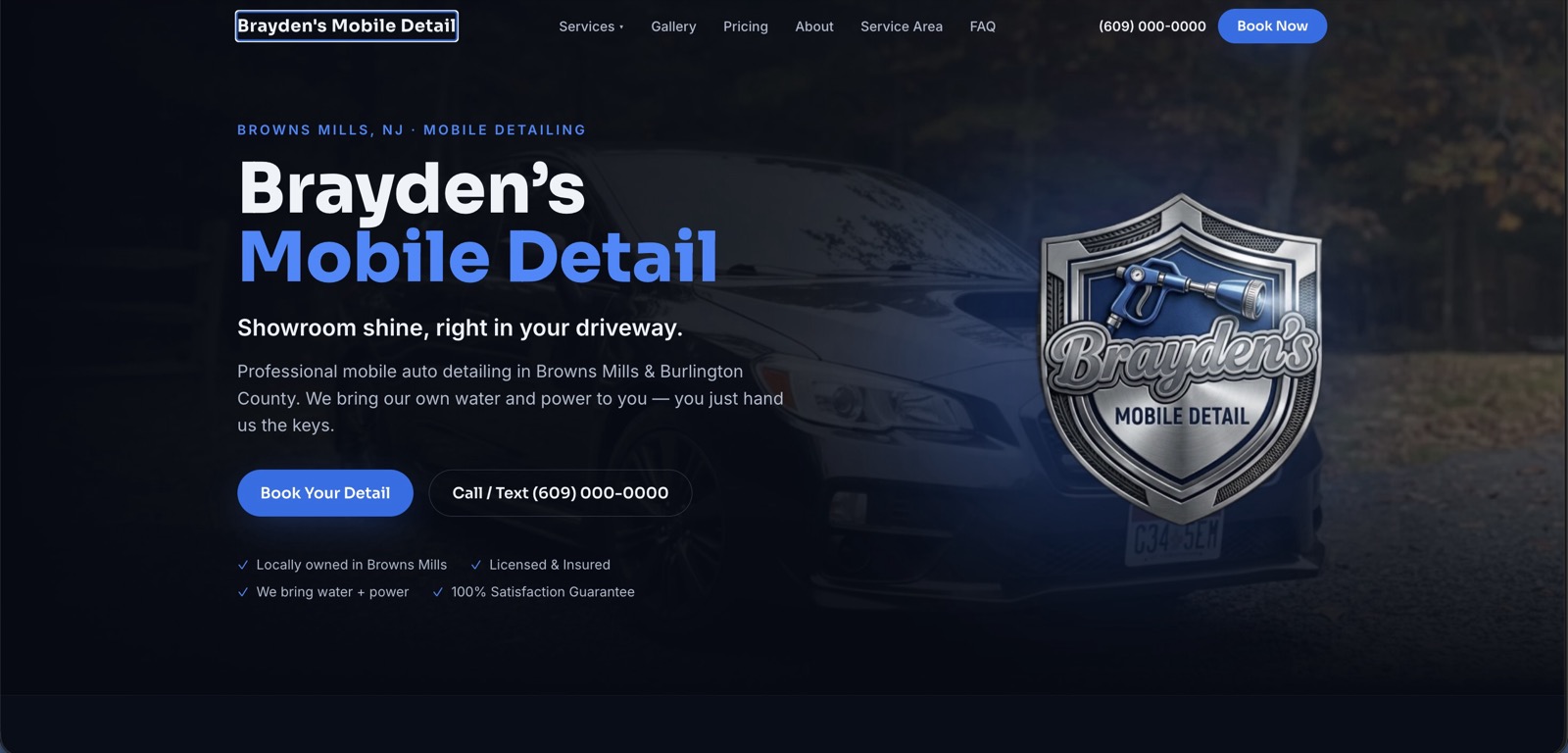
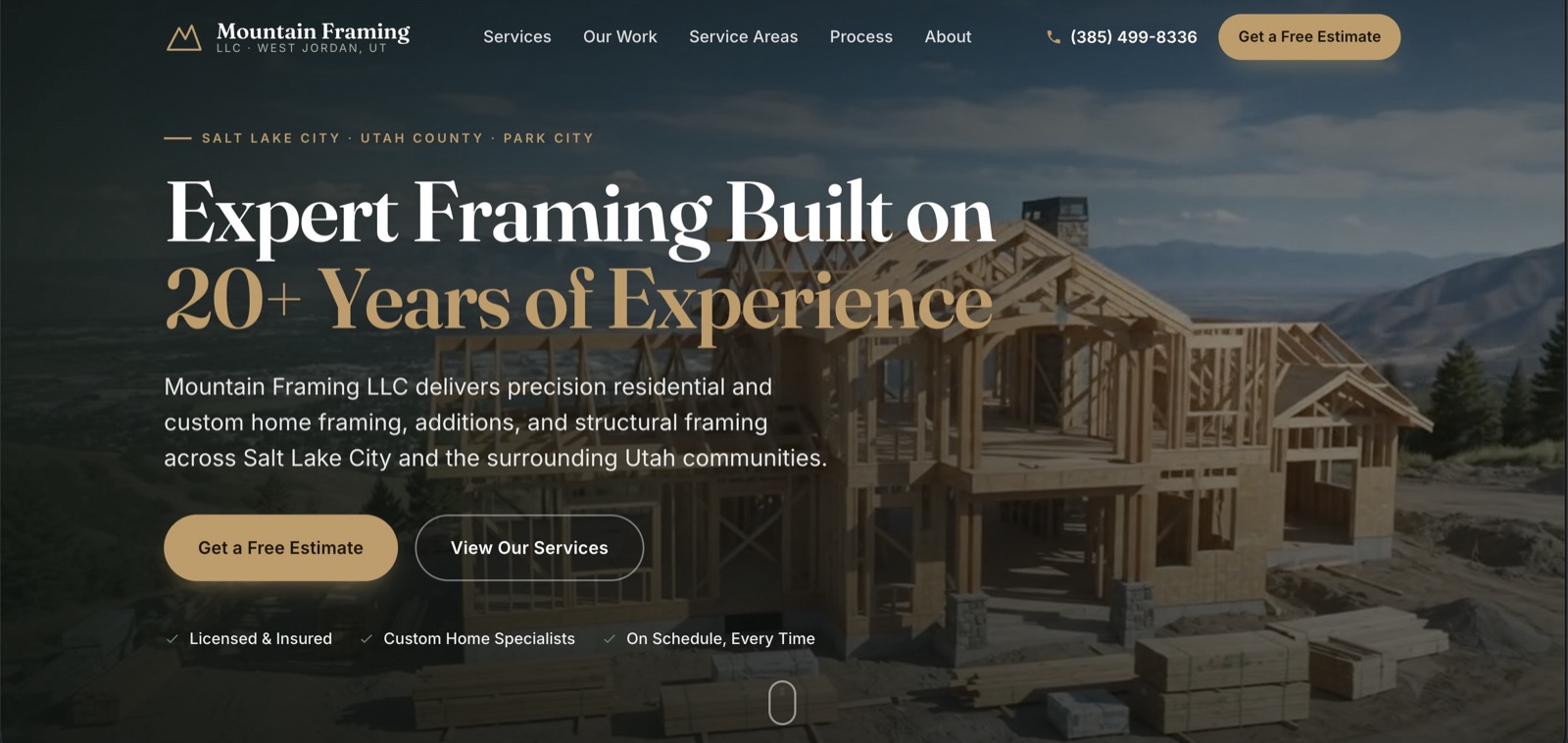
Real client sites, live today. Every one is built to load fast on a phone and send its leads straight to the owner.
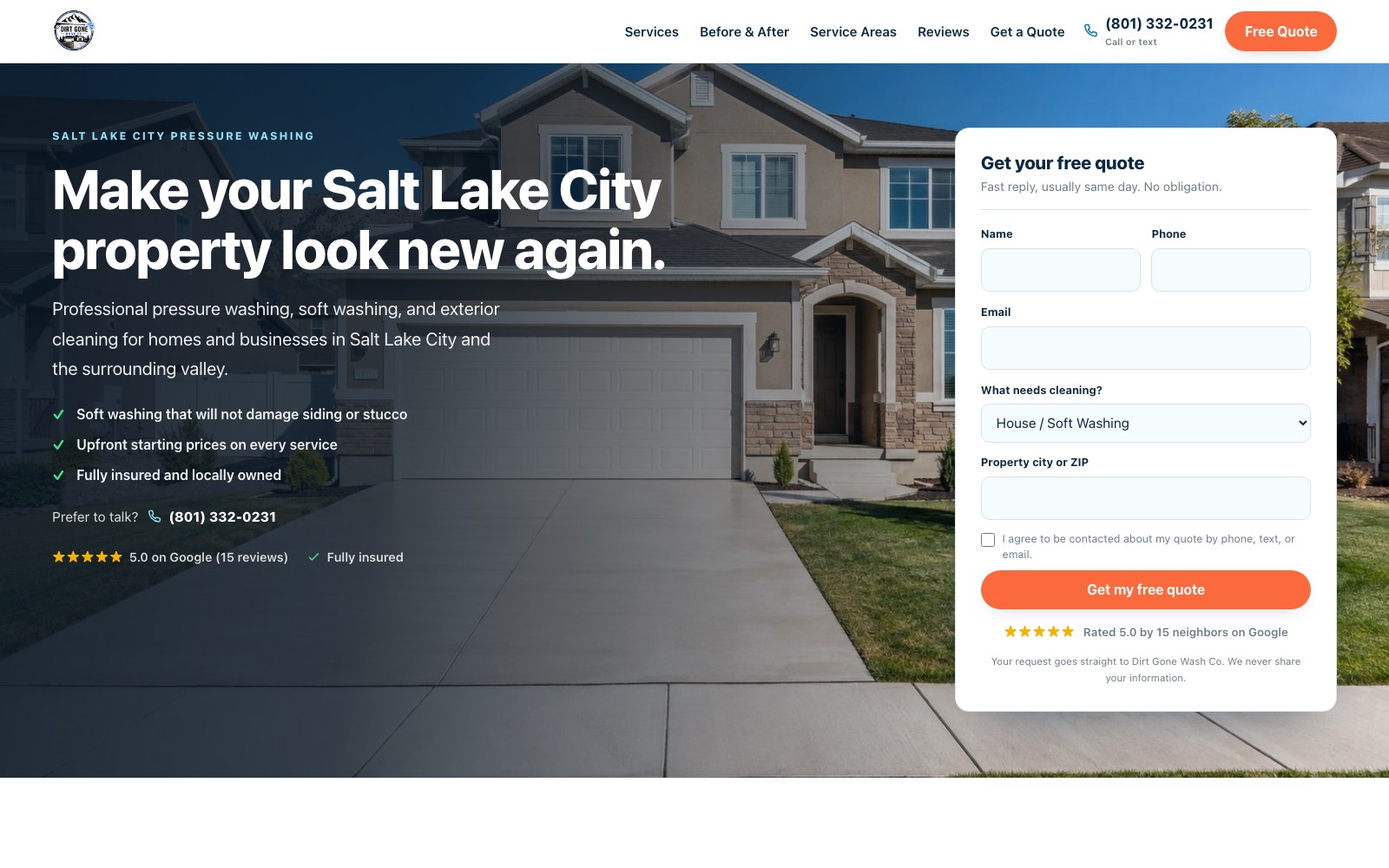
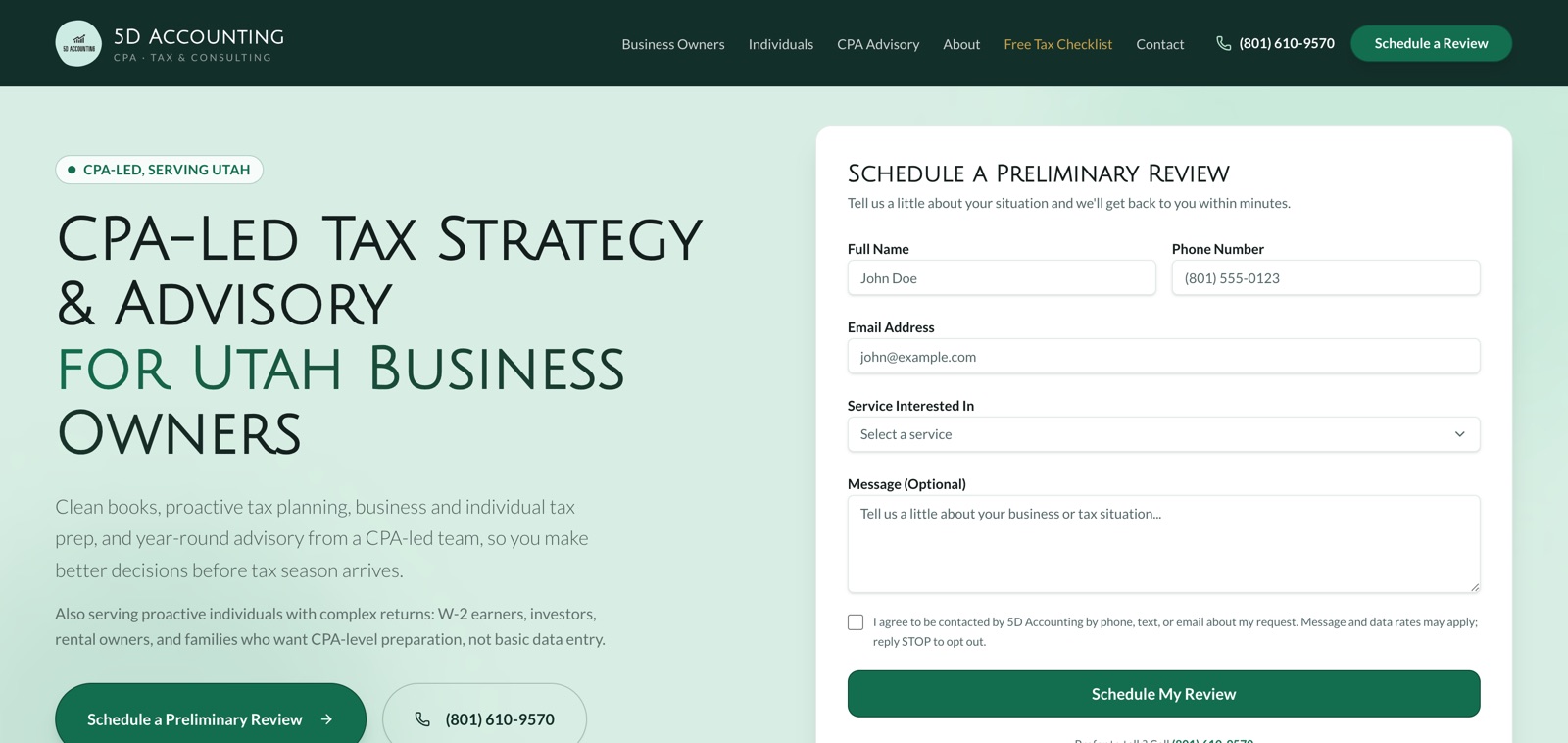
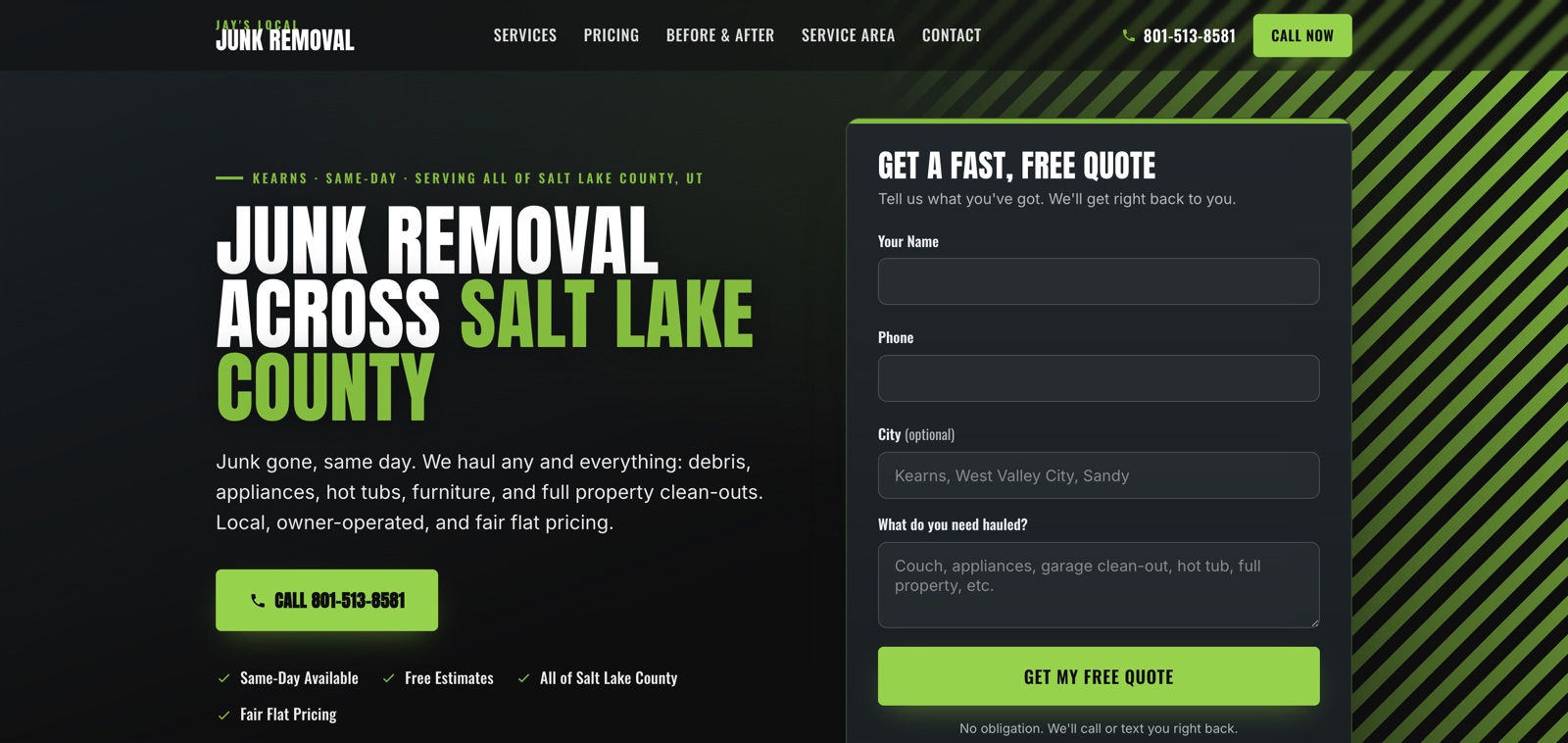
Proof
A site we built, and the owner who bought it
Working with WebDevAuto has been an outstanding experience since the very beginning. They helped bring our vision for FortiFi Security to life with a professional, modern website that exceeded expectations.
Not ready to check out
Want a look at your current site first?
If you are weighing a rebuild, moving off Wix or Squarespace, or you need something the cart does not cover, tell us the situation and we will come back with scope, price, and a timeline. No obligation, and we will say so if a DIY builder is genuinely the better fit for you.
Prefer the phone? (385) 364-8062
How it works
What you actually get
Four things separate a site that books work from a site that just exists. The engineering behind each one is in the detail below.
It loads before they leave
Hand-coded and tuned for a phone on mobile data, not a builder template carrying code you never asked for. Around two seconds, measured on real networks.
It is built for the thumb
Designed at phone width first, then scaled up. Tap-to-call on every screen, and the next step is never more than one tap away.
Every captured lead is routed to you
Forms and call buttons wired straight to your inbox and your CRM on launch day. No plugin chain, no Zapier glue, nothing sitting in a dashboard you never open.
We keep it running
Hosting, monitoring, security, and edits as your business changes are all in the monthly. There is no separate hosting bill and no hourly rate for a copy change.
Part of your WebDevAuto system
The website is the door. Here is the rest of the building.
You can start with the website alone. It works harder when the pieces on either side of it are running too.
- Local SEOPuts people on the site in the first place, by ranking you for what your neighbours search.
- Your websiteYou are hereTurns that visitor into a call, a form, or a booking instead of a back-button.
- Ava, your AI receptionistAnswers the call the site produced, day or night, and texts the caller your booking link while they are still on the phone.
- Missed-call automationTexts back in seconds on the calls nobody picked up, so the lead never goes cold.
- Review automationAsks for the Google review after the job, which feeds the ranking that started the loop.
Or take the whole system at once
The site, the ranking, and the front office that works the leads, on one bill and one login. Pick The whole system in the flow above and the price updates before you commit to anything.
Want to understand how it works?
Here is exactly how we build, operate, and improve it: what a slow site costs you in real money, the engineering invariants we hold every build to, how search setup is baked into the foundation, and how this compares to a DIY builder or a traditional agency.
What a slow website actually costs you
Speed is not a vanity metric on a service-business site. It is the gap between the customer who calls you and the customer who calls the next result:
- 3 seconds1
is where mobile abandonment climbs sharply
and most small-business template sites are well past it on a phone connection
- Most traffic
for a local service business arrives on a phone
usually mid-problem, one-handed, on mobile data rather than wifi
- One tap
is how far a ready-to-book customer should be from calling you
every extra scroll, page load, or form field is somewhere they can quit
None of this is about design taste. A site can be beautiful and still lose the job because it took four seconds to paint on a phone.
Where the job actually gets lost
- ▸The 2am furnace. No heat, kids in the house, panic search on a phone. Whoever loads first and has a tap-to-call button gets a call. Nobody is pinch-zooming a desktop layout at 2am.
- ▸The burst pipe on a Saturday. Water is moving. They are not reading your About page, they are looking for a number big enough to hit with a wet thumb.
- ▸The 11pm symptom search. Someone researching a clinic or a treatment before they will book. A site that looks cheap or loads slowly reads as a business that will handle them the same way.
- ▸The roadside breakdown. One bar of signal, tow truck decision in ninety seconds. A heavy page never finishes loading, and that is the whole opportunity.
- ▸The comparison tab. They have your site and two competitors open at once. The slowest one gets closed first, before a single word gets read.
How the site is engineered, and why each choice makes you money
- ▸Hand-coded static pages, no framework runtime. Your visitor downloads a page, not an application. There is no builder bloat and no JavaScript framework to boot up before anything appears. Outcome: the site paints in about two seconds on mobile data instead of stalling on a spinner.
- ▸Global CDN with automatic HTTPS. Every site is served from Firebase Hosting, so the page is delivered from an edge location near the visitor. Outcome: a customer three states away loads it as fast as one across town.
- ▸Immutable long-lived asset caching. Static assets ship with a one-year immutable cache policy. Outcome: the second page a visitor opens is close to instant, which is exactly when they are deciding whether to call.
- ▸Mobile-first, designed at 375px. We build and test at phone width first, then scale up. Outcome: the site is built for the screen most of your customers actually use, rather than tolerating it.
- ▸Lazy-loaded below-the-fold images. Images further down the page do not compete with the content the visitor came for. Outcome: the part they need appears first.
- ▸Semantic HTML and accessibility built in. Real heading structure, labeled forms, keyboard navigation, readable contrast, built toward WCAG 2.1 AA. Outcome: more customers can use the site, and search engines can read the structure properly.
- ▸Structured data and clean URLs. LocalBusiness schema, unique per-page titles and descriptions, a sitemap, and normalized URLs. Outcome: Google can crawl and classify every page instead of guessing.
- ▸Security headers on every response. Content-type, referrer, and framing protections configured at the host. Outcome: one less way for the site to embarrass you.
No setup fee. The website runs on a 12-month term, then month to month.
Wired into your sales system on day one
- ▸Lead forms land in your CRM. Every submission lands on a real customer record in your unified inbox, not in a spam folder or a plugin nobody checks. Outcome: no lead depends on somebody remembering to check an inbox.
- ▸Tap-to-call on every screen. Every phone number is a one-tap call. Outcome: the ready-to-book visitor is one thumb press from your phone ringing.
- ▸The number can route to an AI receptionist. Add the CRM plan and calls get answered 24/7 instead of rolling to voicemail, with missed-call text-back catching anything that slips.
- ▸Built to rank, then ranked. The schema and structure ship with the build; Local SEO is the service that pushes it into the map pack. Outcome: the site is not just fast, it gets found.
The questions everybody asks before they commit
- ▸"Why is it only $199/mo? What is the catch?" There is not one. Agencies charge $5,000 to $25,000 upfront because they build one custom site from a blank canvas and then hand it over. We build on a proven stack tuned to the trades, and we keep running the site instead of walking away, so the cost is spread over the relationship rather than front-loaded. No setup fee is the same trade: we would rather you start.
- ▸"I already have a website." Good, that is usually the easier conversation. Run the free diagnostic and we will show you exactly where the current one leaks. If it is worth keeping, we will say so.
- ▸"Can I keep my domain?" Yes. It is yours, it stays yours, and you keep it if you leave.
- ▸"Can you move my current site over?" Yes. Migration is part of the build rather than a separate line item.
- ▸"What if I want changes after launch?" Ongoing edits are part of the monthly. You are not paying an hourly rate to change your hours or add a service.
- ▸"What happens if I cancel?" After the first year it is month to month. You keep your domain, your content, your photos, and your customer list.
- ▸"Will it grow with my business?" Adding pages, services, and locations is normal maintenance. If you outgrow what a site can do and need real software, that is a Custom App build.
What is yours, and what we run for you.
DIY builder vs. WordPress or an agency vs. WebDevAuto
| DIY builder (Wix, Squarespace) | WordPress or a traditional agency | WebDevAuto | |
|---|---|---|---|
| What you actually get | A template you assemble and maintain yourself | A custom build, handed off for you to run | A conversion-built site we design and then run as part of your sales system |
| Speed on a phone | Heavy builder code, commonly several seconds to load | Depends on the developer and the plugin stack; rarely re-tested after launch | Hand-coded static pages on a CDN, built to load in about 2 seconds |
| Lead capture and follow-up | A form that emails you, if you wire it up | A contact form; integrations are your problem | Forms and tap-to-call wired into your CRM on day one |
| Who maintains it | You do: updates, plugins, security, uptime | You do, or pay hourly for every change | We host, monitor, and update it every month |
| Search setup | A plugin you configure and hope works | Often an upsell, bolted on after launch | Schema, sitemaps, and clean URLs built into the foundation |
| Cost model | Low monthly fee plus a lot of your own time | Typically $5k to $25k upfront, then you are on your own | One flat $199/mo: design, hosting, and maintenance, no setup fee |
A DIY builder is genuinely fine for a side project, and a good agency will hand you a nice-looking site. The difference is what happens after launch: this one is built to convert and keeps running as part of your sales system instead of being handed over and forgotten.
Website design built for the trades
Every build is shaped around how a home-service business actually wins customers: fast answers, clear pricing, and a tap-to-call on every screen.
no-cool and no-heat emergency CTAs, service-area display, after-hours messaging.
urgent-repair paths, upfront trust signals, tap-to-call on every screen.
safety-first messaging, panel and rewire service pages, licensing and review proof.
storm-damage and inspection paths, project galleries, financing for higher-ticket jobs.
same near-me search pattern, same conversion build: fast, mobile, wired to the phone.
Run a med spa, clinic, law office, or auto shop? We build those too, on their own pages: Health & Wellness, Professional Services, Beauty, and website design for auto repair shops.
Still deciding? Read these next
Weighing a builder, an agency, or a rebuild. These go deeper than this page does:
The honest trade-off between a DIY builder you run yourself and a site built and run for you.
What each of the three actually costs once your own time is priced in.
The full walkthrough, including the parts you can do yourself.
The profile that decides whether you appear at all when somebody searches nearby.
Where every form, call, and message lands, and where the follow-up fires from.
Who builds this, and why it is engineered for the trades rather than sold to them.
How the three lines stack
Engagement
Monthly Services
Three à-la-carte monthly services: website, SEO, and CRM. No setup fees, no deposits. The website runs on a 12-month term and SEO on a 6-month minimum, both month to month after; the CRM is month to month with no minimum. Take one or stack all three.
Not sure where to start? Run a free diagnostic on your current site first.
Website Design & Hosting
A conversion-engineered website that loads fast, captures leads, and stays maintained.
- Custom conversion-engineered website
- Loads in about two seconds
- Lead forms wired to your inbox
- Hosting + monitoring + maintenance
- No setup fee
Any business that needs a professional, high-performing web presence without a big upfront cost.
SEO & Google Business Profile Optimization
Ongoing SEO and Google Business Profile management so you rank on search, Maps, and AI assistant answers.
- Ongoing on-page + technical SEO
- Google Business Profile setup + optimization
- Rank on Google search and Maps
- Show up in AI assistant answers
- Monthly rankings + traffic reporting
Local service businesses where organic search and Google Maps are the primary lead source.
AI CRM
Customer database, pipelines, unified inbox, invoicing, and automated follow-ups, with AI billed by what you use.
- Customer database + pipelines + analytics
- Unified inbox (email + text)
- Invoicing with built-in payments
- Automated follow-ups + scheduling
- AI features (billed by usage)
- Ava answers your calls
- AI texts & emails customers back
- Content + ad generation
Businesses ready to systematize follow-up, automate ops, and add AI on their own terms. AI features are billed based on usage, you only pay for what you actually use.
Frequently asked questions
- How much does a website from WebDevAuto cost?
- The Website Design & Hosting is $199/mo on a 12-month term, then month-to-month, with no setup fee. That includes the conversion-built site, hosting, ongoing maintenance, and edits. The CRM ($249/mo) adds the AI receptionist, unified inbox, and missed-call automation. SEO and Google Business Profile management is a separate $200/mo service that runs on top of the website line rather than replacing it.
- How much should a small business website cost?
- There are three common price points. A DIY builder runs roughly $15 to $40 a month plus a great deal of your own time. A traditional agency build is typically $5,000 to $25,000 upfront, after which maintenance is yours or billed hourly. A managed monthly service sits in between and bundles the build, hosting, and ongoing work. The right answer depends on whether you want to own a project or have a working asset maintained for you.
- Why is it only $199/mo? What is the catch?
- There is no catch, it is a different business model. An agency charges thousands upfront because it designs from a blank canvas and then hands the site over. We build on a proven stack tuned to home-service businesses and keep running the site afterward, so the cost is spread across the relationship instead of front-loaded. There is no setup fee for the same reason: we would rather you start.
- What is a conversion-engineered website?
- A conversion-engineered website is one built primarily to turn visitors into customers rather than to win design awards. In practice that means fast mobile load times, a tap-to-call button on every screen, short forms that route straight into a CRM, clear pricing and trust signals near the decision point, and page structure that guides a visitor to one obvious next step. Design taste matters, but it is downstream of whether the page converts.
- Why do fast websites convert better?
- Because visitors abandon slow pages before they read anything. Mobile abandonment climbs sharply past roughly three seconds, and local service searches are usually made on a phone, mid-problem, on cellular data. Speed also feeds rankings: Google uses Core Web Vitals, which measure how quickly the main content paints and how stable the layout is, as a ranking input. A faster site therefore gets seen by more people and loses fewer of them.
- What are Core Web Vitals?
- Core Web Vitals are Google's measurements of real-world page experience. They cover how quickly the largest piece of content appears, how quickly the page responds to a first interaction, and how much the layout shifts while loading. They are a confirmed ranking input, and they map closely to what a visitor experiences as "this site feels fast" or "this site feels broken."
- Why does mobile-first design matter?
- Most local service searches happen on a phone, often in the middle of the problem the business solves. Google also indexes the mobile version of a site rather than the desktop one. Designing at phone width first means the layout, tap targets, and call buttons are built for the screen that actually gets used, instead of a desktop layout squeezed down afterward.
- Can AI build a professional business website?
- AI tools can produce a page that looks reasonable, and they are genuinely useful for drafting copy and layout ideas. What they do not reliably produce is the part that earns money: correct local schema, a fast hand-tuned page on a real CDN, forms wired into a CRM, accessibility that holds up, and the ongoing maintenance to keep it that way. We use modern tooling throughout the build, but a human engineers and owns the result.
- What makes a website rank well?
- Four things, roughly in order: technically sound pages Google can crawl and understand, content that matches what people actually search, speed and page experience, and authority signals like reviews and consistent business information across the web. For a local service business the Google Business Profile and local schema often matter more than anything on the site itself, which is why the website and local SEO work best together.
- How long does it take to build and launch my site?
- Most sites go from kickoff to launch in about one to two weeks, depending on how quickly we get your content, photos, and branding. Because we build on a proven stack tuned to your trade rather than designing from a blank canvas, the timeline is far shorter than a traditional agency rebuild.
- I already have a website. Can you migrate it?
- Yes, and migration is part of the build rather than a separate charge. In practice we usually rebuild rather than port the old site, because the reason most sites underperform is the stack they were built on. Run the free diagnostic first and we will tell you honestly whether your current site is worth keeping.
- Do I own my website, or am I locked into your platform?
- Your domain, content, photos, branding, and customer list are yours and go with you if you leave. The build itself is hosted and licensed to you rather than transferred: we host and maintain it on our own infrastructure, and if you cancel the hosted site is taken offline, with a one-time static export available for $500 while your account is paid in full. You are never charged per-transaction fees on work booked through the site.
- Can I request edits after launch?
- Yes, ongoing edits are part of the monthly price. Changing your hours, adding a service, swapping photos, or updating pricing is normal maintenance, not a billable request. That is one of the main differences from an agency build where every change after handoff is an hourly line item.
- How often should a business website be updated?
- Content should change whenever the business does: new services, new pricing, new service areas, new photos of real work. Technically, a site needs ongoing attention rather than periodic overhauls, since browsers, search requirements, and performance baselines keep moving. The old pattern of rebuilding every three years usually means a site that spent two of those years quietly underperforming.
- Will my site load fast and work on phones?
- Yes. Sites are built mobile-first, designed and tested at 375px before scaling up, and shipped as hand-coded static pages with no page-builder bloat and no framework runtime to boot up. They are served from a global CDN with long-lived asset caching, so the site paints in about two seconds on mobile data and near-instantly on repeat visits.
- Is the website set up for SEO?
- Search setup is built into the foundation rather than bolted on: LocalBusiness schema, unique per-page titles and descriptions, a sitemap, clean URLs, internal linking, and name, address, and phone consistency tied to your Google Business Profile. Ongoing Local SEO and Google Business Profile management is a separate service if you want the rankings actively worked.
- How does the website connect to my phone and CRM?
- Lead forms land directly on a customer record in the CRM and unified inbox with no manual import, and every phone number is a tap-to-call. Add the CRM plan and the number can route to the AI receptionist so calls get answered 24/7, with missed-call text-back catching anything that slips through. Booking happens through a texted link today, so there is no on-site calendar widget to maintain.
- What is the best website for a small business?
- It depends what the site has to do. For a simple brochure you are happy to build and maintain yourself, a DIY builder like Wix or Squarespace is the cheapest path and there is no shame in it. For a site that has to convert visitors into booked work and connect to the phone and CRM behind it, a custom build wins. See the full Wix and Squarespace comparison for the honest trade-off.
- What happens if I cancel?
- After the initial 12-month term the plan is month to month, so you cancel with your next billing cycle. You keep your domain, your content, your photos, and your customer list. We do not hold a domain hostage as a retention tactic.
Let’s build the system that builds your business.
Build your system
Pick what you need and what it should look like, and see the price before you commit to anything. Flat $199/mo for the website, no setup fee, with your launch date set at kickoff.
Build your systemSources
- 1.Google: Core Web Vitals research (mobile load-time abandonment thresholds) (https://web.dev/vitals/)